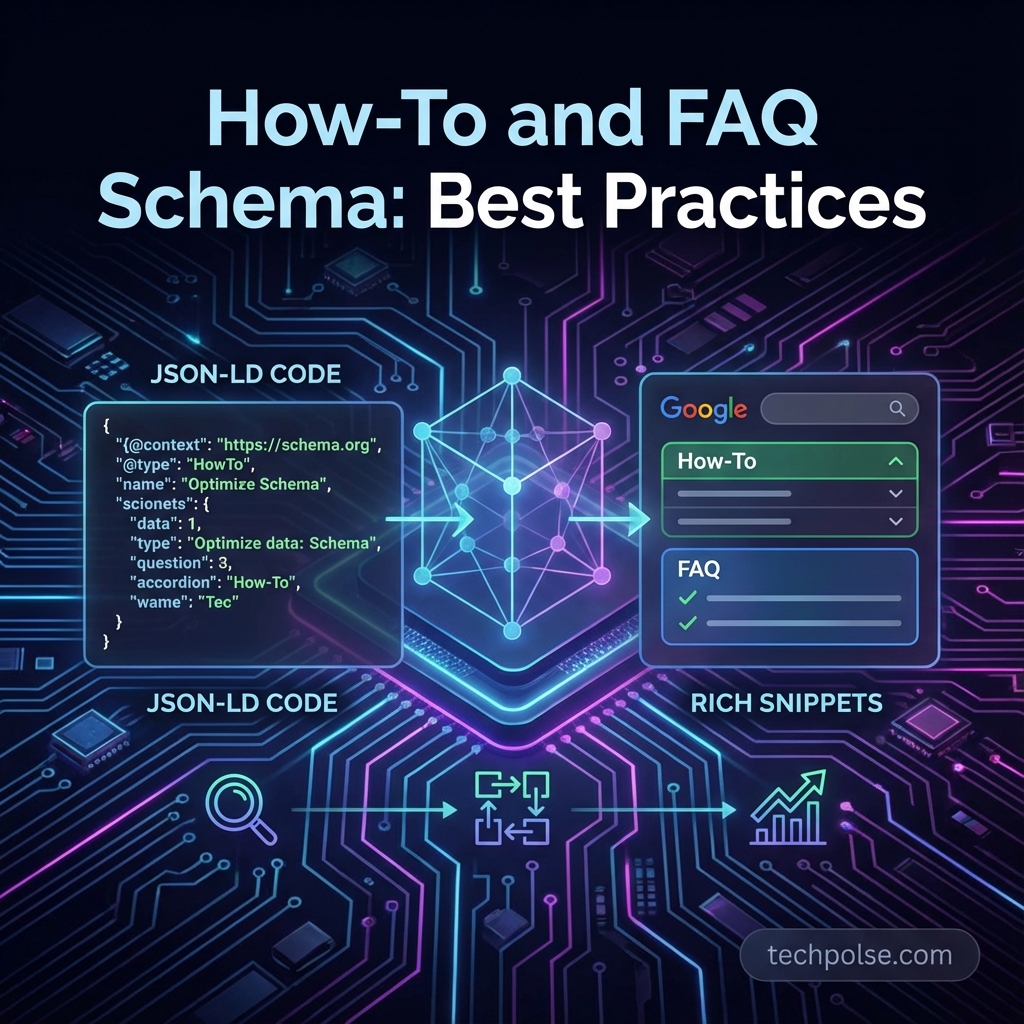
Structured data helps search engines understand your content and can unlock rich results that make your listings stand out. For tech tutorials, HowTo and FAQ schemas are particularly relevant. When implemented correctly, they can display steps, materials, or expandable Q&A directly in search results. This guide covers implementation best practices, common mistakes, and how to validate your schema markup.
- HowTo schema is for step-by-step instructional content with discrete steps
- FAQ schema is for pages containing multiple questions and answers
- Content in schema must match visible page content exactly
- Validate with Google's Rich Results Test before publishing
I. Understanding Schema Types
A. HowTo Schema
HowTo markup is designed for instructional content that accomplishes a specific task through a series of steps.
- When to use: Step-by-step tutorials, installation guides, cooking recipes, DIY instructions.
- Key elements: Steps (required), estimated time, materials/tools needed, images per step.
- Rich result format: Can display expandable steps directly in search results on mobile.
B. FAQ Schema
FAQ markup is for pages containing a list of questions with corresponding answers.
- When to use: Dedicated FAQ pages, articles with Q&A sections, product information with common questions.
- Key elements: Question text and answer text for each Q&A pair.
- Rich result format: Can display expandable accordion of questions in search results.
C. When NOT to Use
- HowTo on non-instructional content: Do not force HowTo schema on articles that are not step-by-step tutorials.
- FAQ for user-generated content: FAQ schema should not contain questions submitted by users (use Q&A schema instead).
- FAQ for single question: If you only have one question, FAQ schema is inappropriate.
II. HowTo Schema Implementation
A. Required Properties
- name: Title of the how-to guide (e.g., "How to Install WordPress on Nginx").
- step: Array of HowToStep items, each with name and text describing that step.
B. Recommended Properties
- totalTime: ISO 8601 duration format (PT30M for 30 minutes).
- estimatedCost: Approximate cost if applicable.
- supply: Materials needed to complete the task.
- tool: Tools required for the task.
- image: Images of the completed task or individual steps.
C. Step Structure
Each step should be clearly defined with actionable instructions.
- HowToStep name: Brief title for the step (e.g., "Install PHP 8.3").
- HowToStep text: Detailed instructions for that step.
- HowToStep image: Optional image showing that step.
- HowToStep url: Optional URL to a specific anchor for that step on the page.
III. FAQ Schema Implementation
A. Structure Requirements
- FAQPage type: The page itself is marked as FAQPage.
- mainEntity: Array of Question items.
- Question name: The full question text.
- acceptedAnswer: Answer object containing the answer text.
B. Answer Formatting
- HTML support: FAQ answers can contain limited HTML (links, lists, basic formatting).
- Length: Keep answers concise but complete. Very long answers may be truncated.
- Links: Include relevant links to detailed pages for complex answers.
IV. Content Matching Requirements
Google requires that structured data content matches visible page content. Violations can result in manual actions.
- Exact match: Question and answer text in schema must appear somewhere on the page.
- No hidden content: Content in schema cannot be hidden from users via CSS or JavaScript.
- Visible steps: HowTo steps must be visible as steps on the page, not just in the schema.
- Avoid stuffing: Do not add irrelevant FAQs just to get rich results.
V. Implementation Methods
A. JSON-LD (Recommended)
- Placement: Add JSON-LD in a script tag, typically in the head or end of body.
- Benefits: Separate from HTML, easy to update, supported by Google's preferred format.
- WordPress: Use SEO plugins like Yoast or Rank Math that generate JSON-LD automatically.
B. Plugin-Based Implementation
- Yoast SEO: Includes HowTo and FAQ blocks for Gutenberg that automatically generate schema.
- Rank Math: Similar block-based schema generation with more options.
- Custom plugins: Schema-specific plugins like Schema Pro offer additional control.
VI. Validation and Testing
A. Google Rich Results Test
- Test URL or code: Submit page URL or paste code directly to test.
- View detected items: See which schema types Google detected and any warnings/errors.
- Preview: See how rich results might appear in search (though actual appearance is not guaranteed).
B. Schema Markup Validator
- Syntax validation: Schema.org's validator checks syntax independent of Google's requirements.
- All schema types: Tests schema types Google does not support for rich results.
C. Search Console Enhancements
- Monitor after publishing: Search Console shows detected schema and any errors over time.
- Fix issues promptly: Address reported errors to maintain rich result eligibility.
VII. Common Mistakes
- Mismatched content: Schema contains text not visible on the page.
- Wrong schema type: Using HowTo for content that is not step-by-step instructions.
- Duplicate questions: Repeating the same question multiple times in FAQ schema.
- Promotional content: FAQ answers that are advertisements rather than helpful information.
- Incomplete steps: HowTo steps that reference content not in the step text.
- No visible FAQ: Adding FAQ schema without visible Q&A section on the page.
VIII. Rich Results Are Not Guaranteed
Valid schema does not guarantee rich results will appear.
- Google's discretion: Google decides whether to display rich results based on many factors.
- Query relevance: Rich results may only appear for certain queries or user contexts.
- Competition: Other results may be deemed more relevant for rich result display.
- Mobile focus: Some rich results appear more often on mobile than desktop.
IX. Conclusion
HowTo and FAQ schema can enhance search visibility when implemented correctly on appropriate content. Use HowTo for genuine step-by-step tutorials and FAQ for pages with natural question-answer content. Always ensure schema content matches visible page content, validate with Google's tools before publishing, and monitor Search Console for ongoing issues. While rich results are not guaranteed, proper schema implementation provides search engines with clearer understanding of your content, potentially improving both visibility and click-through rates.
Have you seen rich results from your schema implementation? Share your experience!